Beware: Plant-Based Politicians
by David Palethorpe
The other morning I encountered something that genuinely made me stop mid-sip of my tea and say, out loud, “What the Wednesday, Thursday, Friday…?”
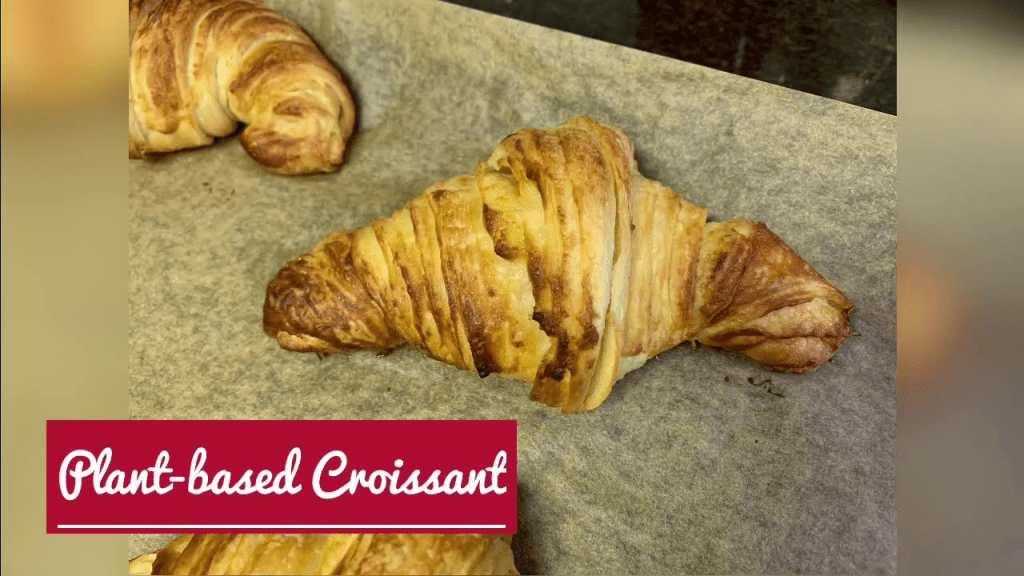
It was a croissant.
But not just any croissant.
Oh no.
This croissant had a declaration.
A warning.
A moral mission, printed in bold, self-congratulatory type:
“PLANT-BASED CROISSANT.”
Now, I’m no croissant purist.
Life is short, arteries are shorter — I’ll eat whatever tastes good.
But this wasn’t about flavour.
This was about messaging.
About performance.
About someone, somewhere, deciding that a pastry needed a political identity.
Because apparently, even breakfast is woke now.
What Makes a Croissant “Plant-Based”?
I turned over the packaging, half-expecting to find an essay on carbon footprints, animal liberation, and a quote from Greta Thunberg.
Instead, the ingredients were remarkably unremarkable: flour, sunflower oil, oat milk, and a hint of smugness.
And I thought: Why are we signalling so hard about food these days?
Why is a croissant shouting at me about its lifestyle choices?
It’s not just croissants.
It’s everything.
From coffee cups to washing-up liquid, there’s a tsunami of slogans saying,
“Look how ethically superior we are! Look how inclusive, sustainable, and planet-loving our products are! Please validate us!”
But you have to wonder: are they really trying to save the planet… or just riding the latest marketing bandwagon until it’s profitable to jump to the next?
Let’s be real.
There’s a certain kind of business that shouts,
“We care about the planet!” while casually importing blueberries from halfway across the globe via diesel-powered freighters.
They’ll tell you their packaging is made from 100% recycled self-righteousness, yet their supply chains run through countries with human rights records so appalling, Dracula would win Humanitarian of the Year by comparison.
One week, it’s rainbow flags and plant-based pastries.
The next, it’s trading deals with regimes who think diversity means having two kinds of prison cells.
So, which is it?
Are these companies morally committed, or just morally convenient?
And Then There’s the Politicians…
Which brings me, naturally, to politics.
Because this whole episode got me thinking perhaps the croissant isn’t the problem.
Perhaps it’s a metaphor. A flaky, buttery metaphor for our public life.
We are governed now by plant-based politicians.
Leaders carefully cultivated in echo chambers, fed on buzzwords and strategy memos, and processed until all real flavour has been removed — just enough ideology to give the illusion of substance, but not so much as to cause indigestion among donors.
They’re cholesterol-free, morally gluten-free, and contain zero actual commitment.
But boy, do they look great in the packaging.
Warning Labels for the Rest of Us
Maybe we need to take a leaf from the croissant’s playbook and start slapping labels on our leaders.
Imagine the transparency:
• “Ethically sourced but manufactured in a lobbying facility that also handles nuts.”
• “May contain trace amounts of sincerity.”
• “This product was tested on the working class. Results inconclusive.”
• “Free from responsibility. Contains artificial empathy.”
Because if businesses can greenwash, pinkwash, and oat milk-wash their way into our wallets, and politicians can PR-spin their way into office, maybe it’s time we started demanding a bit more actual substance — or at least honesty about the lack of it.
Final Thought
I’m not against plant-based diets. I’m not even against plant-based croissants, if they taste decent and don’t fall apart like a political policy promise.
What I am against is the mass production of synthetic sincerity — whether in food, in business, or in government.
It’s time to start checking the labels.
Not just for what’s in the product — but for what might be missing.
And remember just because it’s plant-based, doesn’t mean it’s good for you.
Especially when, as we are now seeing in the UK, it’s running for office.

Leave a comment