Many will know that one of my passions is Rugby Union.
I used to be a Rugby Development Officer and Regional Development Officer, and over the years I’ve coached at all sorts of levels — from the England Women’s Students in the early ’90s (back when they were in their embryonic stage) to the England Women B team, whom I had the pleasure of taking on a five-game winning European tour in 1998.
That Easter weekend coincided, rather inconveniently, with major floods in Northampton, where I lived at the time.
You could say I was keeping one eye on the forwards and the other on the rising waterline at home.
I also had the privilege of coaching the East Midlands U21s to a national championship and working at the Northampton Saints Academy, where I was lucky enough to work with several players who later became household names.
But honestly, the real joy of coaching isn’t just found under bright lights or in packed stadiums — it’s out there on muddy pitches with so-called “Junior” clubs like Peterborough, Luton, and Petersfield, or with the Royal Navy Colts.
For Luton to go unbeaten all season and earn promotion, for Petersfield to beat the then high flying Havant, and for the Navy U19s to win the Inter-Services Championship — these might not be World Cup moments, but for those lads, they were life-changing.
And for a coach, that’s what it’s all about.
When Wales Ruled the World
Now, anyone who played rugby in the 1970s will remember there was one nation that didn’t just play the game but redefined it: Wales.
They didn’t just win — they did it with swagger.
JPR Williams, Gareth Edwards, Phil Bennett… they played like they’d been given divine permission to make Englishmen look foolish.
For English players of my generation, facing any Welsh team at any level was a humbling experience.
You’d come off the pitch battered, bruised, and wondering if you should take up something less painful — like trainspotting or underwater Ludo.
I’ve got Welsh friends and relatives, and every February our rivalry reignites.
For 80 minutes, national pride is on the line.
Win, and you’re a hero.
Lose, and you can expect a phone call at 2 a.m. that starts with:
“Morning! Have you seen the result?”
And probably another one every hour after that.
But that’s sport. It’s not hatred — it’s heritage. It’s banter, pride, and just a pinch of madness that keeps us human.
And Then There Was the Flag…
Which brings me neatly to the latest example of modern-day madness and nonsense.
A Newton Abbot resident recently wrote to their local politician — you will probably guess which party the politician belonged to — concerned about a sudden outbreak of St George’s flags appearing overnight on lampposts in their street.
The politician replied, warning that the sight of these flags mean different things to different people, which is right,
However…..
He then went on and gave the example that Pride Flags might….
“Encourage people, particularly young people, toward sexual experimentation.”
Yes, really.
Now, if that doesn’t baffle you, nothing will.
Are we seriously saying that a flag fluttering in the wind could trigger some uncontrollable urge?
If that’s true, then when I see a Welsh flag, should I expect to start learning Welsh?
When I pass a Jamaican flag, will I suddenly break into a reggae beat and start speaking in patois?
(And if so, would that make me culturally insensitive or just rhythmically gifted?)
And heaven forbid I see an Irish flag — I might be forced to drop everything, find a pub, and start enjoying the Craic immediately.
At this rate, when the Six Nations comes around, I’ll have to keep my curtains shut just in case I accidentally change nationality halfway through a match.
Final Whistle
Rugby teaches you many things — teamwork, respect, and the importance of not taking yourself too seriously, it also provided friendships for life.
Perhaps it’s time some of our politicians joined a rugby club.
After all, 80 minutes in the mud tends to knock a bit of sense into anyone.
Spare a Thought for the People Who Show the Best of Britain
by David Palethorpe
In all the noise about migration — the headlines about “boat people,” the outrage over costs, and the soundbites from ReformUK Ltd — something essential has been lost: our humanity.
Much of the rhetoric that dominates the debate, in my view, is not about policy or practicality but about prejudice.
It is racism directed against men, women, and children fleeing persecution and danger, people who come here because they still believe Britain is a country of fairness, tolerance, and kindness.
After some time on these shores, and after hearing the daily tide of vitriol, they might be forgiven for wondering whether that reputation is still deserved.
But there is another side to Britain — one that still embodies those values we like to think define us.
The first people these refugees meet when they reach our coast are not politicians or pundits, but the volunteers of the Royal National Lifeboat Institution (RNLI).
These are ordinary men and women who, without pay and often at great personal risk, head out into one of the world’s busiest sea lanes — the English Channel — to rescue those whose flimsy boats are failing beneath them.
Funded by public donations, RNLI crews save lives every year.
And when they cannot save everyone, they perform the harrowing duty of recovering the bodies of those who never make it.
For all the talk of “young men of fighting age,” let’s remember who else is on those boats.
There are women.
There are children.
There are orphans who arrive here alone after losing their parents somewhere on the journey — children who have already seen more horror than most of us could imagine.
When these survivors finally reach dry land, it is again volunteers — hundreds of them — who meet them with compassion.
They offer hot food, dry clothes, blankets, and a safe place to rest.
For many, it is the first warm meal, the first dry bed, and the first night of safety they’ve had in months, even years.
These volunteers are not looking for attention or applause.
They act out of simple decency — a belief that no one should be left to drown or freeze because of where they were born.
They are the best of Britain.
Yet they, too, feel the chill of our political climate.
Many of them are frightened to speak publicly about what they witness — intimidated by the divisive and hateful rhetoric that has seeped into our politics and our press.
Figures like Nigel Farage and his entourage have made compassion something to sneer at, and kindness something to question.
But the truth is this: every time a RNLI crew launches into rough seas to save a life, every time a volunteer hands a child a blanket, they are living proof that Britain’s conscience is not yet lost.
So, when we talk about asylum seekers — people exercising their legal right to seek refuge under the very Human Rights principles that Britain helped to draft — let us also talk about the people who greet them with care rather than contempt.
They show the country we could still be humane, generous, and proud of our capacity for compassion.
Because if there is any hope for what it means to be British, it lies not in those who shout the loudest about “taking back control,” but in those who, quietly and without fuss, refuse to turn their backs on another human being in need
“So when you hear a member of Reform UK Ltd, or others of their ilk, talk about people suffering from ‘compassion overload’ — their latest attempt to mask prejudice and racism — spare a thought for those who truly represent the best of Britain.”
Opinion Perhaps Nigel Farage Has Finally Solved the Overpopulation Problem
by David Palethorpe
I used to think Nigel Farage and his political offspring were simply sad and angry people with nothing better to do than cause division and hatred.
Angry about immigration, Brussels, bendy bananas — the usual stuff.
I even gave them the benefit of the doubt once, believing their endless declarations of “We’re not racist” were sincere, if a little over-rehearsed.
But lately, I’m starting to wonder if I’ve underestimated them.
Perhaps, beneath all the shouting and pint-waving, there’s a masterplan.
Because if there’s one undeniable problem facing the planet, it’s that there are too many of us — over seven billion humans cluttering up the place.
Maybe, just maybe, Reform UK has found a brilliant but cruel solution: deportation as population control.
Take their modest proposal to deport 600,000 residents of the United Kingdom.
That’s only the starter course.
The main meal, one suspects, will come later, once they’ve warmed up the deportation vans and topped up the diesel.
Let’s look at the numbers.
Around 10% of teachers in this country are not UK-born — many of them teaching the dreaded STEM subjects: science, technology, engineering, and mathematics.
Deport them, and suddenly there’s no one left to explain how the internet works or why bridges don’t fall down.
But then again, who needs engineers when our manufacturing base has already gone the way of the dodo?
Think of the savings on education!
Next, the military.
We’ve got roughly 4,000 Gurkhas and another 6,000 non-UK nationals serving in our armed forces.
Deport them, and you can slash the defence budget overnight.
Sure, the army would shrink by almost 10%, but on the bright side, we’d be physically incapable of starting any more wars.
Peace through incompetence — it’s genius, really.
And then there’s the NHS.
About 13% of NHS staff are foreign nationals.
Get rid of them, and the queues in A&E will evaporate — not because anyone’s being treated, but because half the patients will have died waiting.
Infant mortality will rise, life expectancy will plummet, and — here’s the clever bit — the welfare and pensions bills will drop dramatically.
A leaner, meaner Britain, literally.
You see, once you strip out the people who keep the country running, the costs take care of themselves.
Reform UK might actually be the most effective population-reduction movement since the Black Death.
Of course, once the deportations are done, there’s always room for a Phase Two.
Perhaps a licensing system for childbirth — one child per couple unless you’ve been privately educated or can prove your great-grandfather owned a small section of Surrey.
Equality of opportunity, Reform UK-style.
So yes, maybe I’ve been too harsh on Mr Farage and friends.
Maybe they’re not just xenophobic populists shouting at clouds.
Maybe they’re visionary demographers with a bold new strategy for tackling overpopulation, pension liabilities, and public spending all at once.
The only downside, of course, is that when they’ve finished “saving” Britain, there won’t be many Britons left to enjoy it.
But Ho Hum those that remain will be able to have a whole County to themselves.
It’s coming up to October 31st, and here we are again: bloody Halloween in Ipplepen. Children — and, let’s be honest, some of their parents — dress up as vampires, witches, and ghouls, then knock on doors demanding money or sweets.
On any other night of the year, it would be called robbery. But tonight it’s “tradition.”
Quite what the vicar makes of it all is anyone’s guess.
With the numbers involved, he must wonder whether there’s a way to convert this pagan ritual into church attendance.
Imagine it — St Andrew’s bursting at the seams every week!
Of course, he’d risk alienating the more traditional pew-warmers, but still, one can dream.
Meanwhile, the village marks the “start of winter” with barbecues, serving the usual fare alongside newly invented cocktails with names like Boiled Black Oil — a lethal mix of dark and white rum that would drop a rhino after two glasses.
Over at the Welly and Con Club, the regulars look on with stoic amusement as non-drinkers, emboldened by a couple of Halloween specials, stagger home in zig-zag fashion.
Fortunately, it falls on a Friday this year and an early finish for most.
A blessing, really, as not much productive work is likely to be done as preparation for the pagan revelries take precedence.
The consolation?
A hangover cure of reheated leftovers, cheese, and celery sticks — eaten out of an overfilled grill pan, naturally.
The Paradox of Tolerance – A Reflection on Who We Are
by David Palethorpe
I used to tell my children — now adults themselves — that one of if not the greatest qualities of the British people have always been our tolerance.
We’ve been a nation that, even when we disagreed, respected difference.
We had an unspoken understanding that other people’s rights and freedoms were as precious as our own, even to the point that unlike so many other nations we didn’t feel the need of a written constitution to justify the understanding.
But I’m not sure I can say that with the same conviction to my grandchildren today.
Something has shifted — not only in the wider world, but closer to home.
Across the UK, and yes, even here in Teignbridge, the tone of public debate has hardened.
The patience and quiet decency that used to define British life feel increasingly drowned out by anger, suspicion, and division.
And if doesn’t deeply trouble you it should – and it does me, because-
It raises a serious question — one that might sound philosophical, but it’s also profoundly practical:
Is it right to be intolerant of those who are intolerant?
Because I will feely admit, I’ve found my own tolerance being tested.
I can accept differences of opinion, different faiths, lifestyles, or beliefs — in fact, that diversity is what makes our communities vibrant, exciting, interesting and human.
But what happens when people use their freedom not to enrich debate, but to silence others?
What happens when tolerance is twisted into a weapon of intimidation by those who refuse to show it in return?
The philosopher Karl Popper once warned that “unlimited tolerance must lead to the disappearance of tolerance.”
If we tolerate everything — even hatred and bigotry — we risk losing the very values and freedoms we claim to protect.
And that’s where I find myself today.
I am, I suppose, intolerant of intolerance.
Not because I’ve lost faith or confidence in the principles of freedom and respect, but because I believe they must be defended.
Look around — across the Atlantic, across Europe, and even here in our own towns — people are being scapegoated.
Whether it’s asylum seekers, minority groups, or simply those who hold a different political view, the easiest targets still remain all far too often the ones without a platform or a voice.
And when and if we allow that to happen, it’s not just them who lose — it’s all of us.
In Teignbridge, we see every day what happens when communities come together — volunteers running food banks, local people and businesses supporting those most in need, people looking out for their neighbours.
That is the Britain I believe in.
That is the Ipplepen and Teignbridge I’m proud to currently represent.
But to preserve that spirit, we cannot be passive.
We cannot simply shrug and say, “that’s just the way things are.”
Because history tells us what happens when good people stay silent while intolerance grows.
It always ends the same way — in conflict, in cruelty, and in regret.
So perhaps the lesson is this: tolerance isn’t weakness.
It’s strength — the strength to listen, to empathise, and to stand up when it matters most.
But it also means drawing a line when others seek to diminish and destroy those same values.
I’m perhaps overly optimistic because I still believe that the vast majority of British people — and certainly the people of Teignbridge — are fundamentally decent.
(Though I would be happier if more of them voted)
But decency needs defending.
And if being intolerant of intolerance is the price of preserving that decency, then so be it.
Because true tolerance isn’t about turning a blind eye to hate — it’s about keeping our eyes open and refusing to let it define who we are.
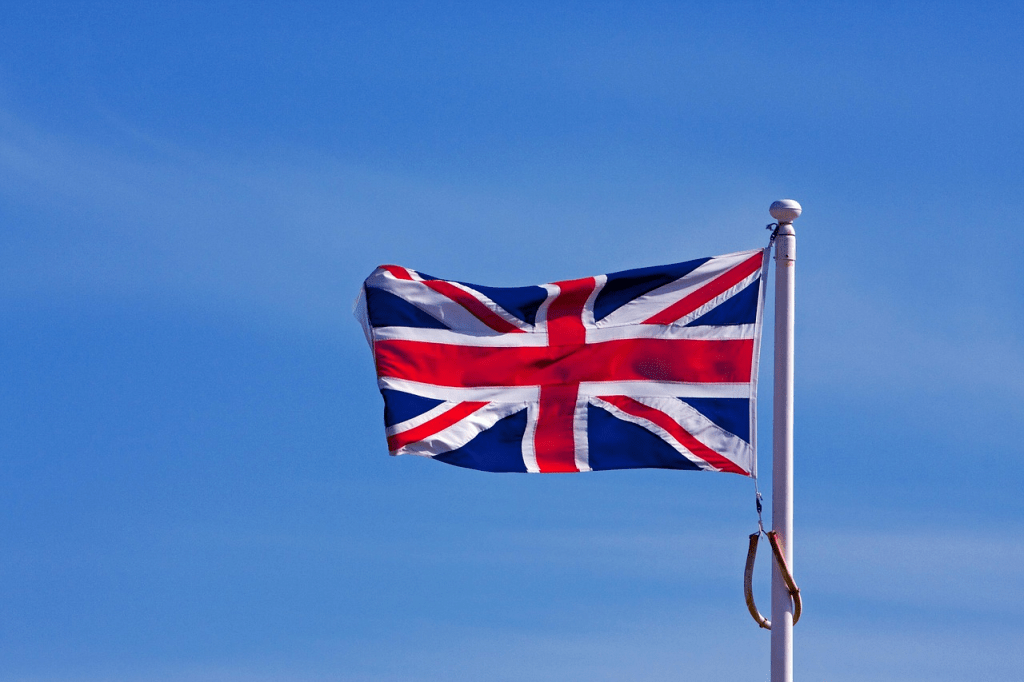
The Union Flag belongs to everyone who calls the UK home – It Should Unite NOT Intimidate
Flags, Fear, and What True Patriotism Means
By Cllr David Palethorpe, Deputy Leader, Teignbridge District Council
At Teignbridge District Council yesterday (Thursday 23 October), we discussed the value that foreign nationals, refugees, asylum seekers, and those with indefinite leave to remain bring to our country — to the NHS, the armed forces, education, tourism, and so much more, especially here in South Devon.
Unfortunately, a number of councillors didn’t support the motion. That says far more about them than it does about those of us who believe in recognising the contribution these individuals make to our communities.
But that’s a discussion for another time.
One issue that came up was the sudden proliferation of flags — Union Jacks and St George’s crosses on lampposts. Several councillors have received messages from residents saying that the sheer number of flags appearing overnight has made them feel uneasy or even intimidated.
I personally don’t have a problem with flags. Having served 23 years in the Royal Navy, I’ve saluted the flag countless times. But I understand why some people feel uncomfortable when flags are used to send the wrong message.
A flag is just a piece of material — no more, no less. Its meaning depends entirely on the intent behind it.
Those who use flags to intimidate or divide want others to feel afraid. It’s the classic tactic of bullies — from the playground to the corridors of power: provoke fear, marginalise people, and claim ownership of something that belongs to us all.
Easier said than done, I know — but don’t give them that satisfaction.
Simply remind yourself what the flag really stands for. The Union Flag represents everyone who calls the United Kingdom home, regardless of where they were born. It is a symbol of unity not division.
The clue is in the name, Union Flag of the United Kingdom.
If you’ve made this country your home, then this is your flag too.
And a final note to those who are putting flags on street lamp posts: if you truly want to show your patriotism, do it openly and properly.
For goodness’ sake, hang the bloody thing the right way up.
Don’t creep around at night with cable ties — do it in daylight, be seen, be proud, be transparent, and be willing to explain what you’re doing.
Take responsibility and when it’s torn or frayed, replace it.
If the flag really is your expression of pride and patriotism, then at the very least treat it with the respect it deserves.
Just out of interest the other day, (OK I was bored), I went through my junk emails.
Normally, I just open the folder, select all, and delete without reading anything — on the theory that if it’s important, whoever sent it will get in touch again.
However, this time I decided to take a look.
And I have to say, it was quite an education.
Apparently, I’ve qualified — though I don’t remember applying — for an enlargement of my manhood.
Who knew?
Unless someone’s filled out the form on my behalf, or it’s simply something that kicks in automatically when you reach a certain age, it came as a complete surprise.
Then there were the more “serious” ones: three separate emails from different sites, all claiming they’d been tracking my online conduct and knew exactly what I’d been up to.
According to them, I’d been visiting websites of a rather dubious character — the kind involving males and females demonstrating levels of athletic flexibility that would qualify them for the Olympic gymnastics team.
Their demand was simple: send them $600 or they’d release the “evidence” on my social media accounts.
Now, I can see how some people might panic at that, even if completely innocent.
My own reaction was rather different — relief, actually.
I thought, “Thank goodness someone can tell me what I’ve been doing!”
I’ve reached the age where I often walk into a room and can’t remember why I’m there, so it would be quite handy to have someone tracking my movements, fictitious or otherwise.
Of course, there’s a serious side.
There are plenty of people who might feel threatened by such scams.
But it also made me think about the absurdities of the online world.
Take shopping, for instance. I recently went into a large supermarket in Peterborough to buy the essentials — sausages, bacon, milk, bread.
You know, the basics.
Yet outside was a pop-up stall from which I was offered double glazing.
Now, I don’t know about anyone else, but I’ve never gone out for a pound of sausages and thought,
“You know what?
While I’m here, I might as well get central heating, a new boiler, and some roof tiles.”
It makes you wonder how effective those sales pitches really are.
Has anyone ever stopped mid-shop and thought,
“Perfect timing!
Just what I need — triple glazing with one-way windows”?
Mind you, if you did have one-way windows, at least you wouldn’t have to worry about people spying on you and threatening to publish what you supposedly get up to in your own home.
Anyway, next time you’re tempted to hit “Select All” and delete your junk emails, maybe take a minute to browse through them.
They can be quite amusing.
In one afternoon, I discovered I apparently need total debt relief for my financial freedom, canvas prints of all my photographs, a complete bathroom remodel (including a Jacuzzi bath that wouldn’t fit in our bathroom if I tried), home security systems from concerned Americans in Utah, and — best of all — a “Shein Mystery Box” that I’ve been “specially selected” to receive.
And let’s not forget the many young, attractive, single women from Eastern Europe who seem very eager to get to know me.
I rather suspect that if they actually did get to know me, they’d quickly change their minds — and Liz would most certainly have something to say about it!
So, there we have it: the curious, ridiculous, and occasionally entertaining world of the junk mailbox — proof that even in the digital age, there’s still plenty of comedy in everyday life.
Mr Middle England recently watched a television advert for a life insurance company.
To say he viewed it with a mixture of amusement and bemusement would be an understatement.
For those who haven’t seen it: a young couple are moving into their first home.
Happiness abounds as they unpack boxes, laugh, and exchange those syrupy, advert-style loving looks.
Up to this point, one might think, “Ah, isn’t this lovely?”
Then comes the twist.
The woman turns to her partner and says something like:
“Before we go any further, I’d feel happier if you arranged life insurance straight away — just to make sure I’m alright if anything happens to you.”
Without hesitation — the fool — he picks up the phone and arranges the policy.
They both smile, life goes on, and the advert ends.
Now, being somewhat cynical — alright, world-weary cynical — Mr ME couldn’t help but wonder.
If Mrs ME had said something like that to him when they moved into their first home (they weren’t married then), he might well have thought: what’s she got planned?
Especially since he remembered she was very keen on having a patio built at the back of the house.
So yes, the importance of life insurance cannot be understated.
But the timing, as portrayed in the advert, struck Mr and Mrs ME as darkly amusing.
And now they can’t help but wonder:
Did she kill him?
Did she bury him under the patio?
And more importantly…
Did they pay out?
Reflections of a Boomer
Reflections on life of an insignificant atom in the universe