• Mr & Mrs Middle England: Grave Matters and Hounds

    Another week in Ipplepen, and in true British fashion we begin with the weather.

    It has rained — heavily, lightly, sideways — with the occasional burst of sunshine just to confuse us further.

    October to date has been unusually warm too, nudging into double digits, leaving everyone dithering between the safety of a winter coat or the reckless gamble of a jumper and hypothermia.

    On the wind this week came the sound of children playing at the primary school a mile away.

    There’s nothing better than laughter drifting across the village — unless, of course, you’re one of those grumpy souls who files complaints about “too much noise.”

    Every village has them.

    But laughter also set me thinking about time.

    What I was hearing had already happened a fraction of a second before I heard it.

    Which means, technically, I was living in the future.

    Bloody Einstein and his E = mc².

    Only in Ipplepen can schoolyard giggles send you spiralling into relativity.

    St Andrew’s Church, standing for over 700 years, is one of those places I admire from a safe distance — I’d rather not risk a bolt of divine retribution given my views on religion.

    But the churchyard is irresistible: a library of human stories written in stone.

    One grave in particular always draws attention:

    Bertram Fletcher Robinson, journalist, barrister, and friend of Sir Arthur Conan Doyle.

    Robinson died in 1907, officially of enteric fever and peritonitis, aged just 36.

    But whispers lingered: that he was poisoned, perhaps even murdered.

    Why?

    Because it was Robinson — not Doyle — who first spun tales of wild beasts on Dartmoor, stories, that became the seed of The Hound of the Baskervilles.

    Legend has it the two men quarrelled over ownership, and Doyle’s ambition may have hastened his friend’s end.

    The church sensibly refused to exhume the body, so the rumours remain, pacing the moors alongside the spectral hound itself.

    It proves what I’ve always said: every graveyard tells a story — tragic, heroic, or downright mysterious.

    And here in Ipplepen, even the dead keep the gossip alive.

    Now, Mr & Mrs Middle England may fret about burglars, immigrants, or the price of milk, but the real excitement lies under our feet — in 700 years of stories etched into stone.

    And with that, I’m off to the Con Club and the Welly.

    Tales of hounds and poison are thirsty work.
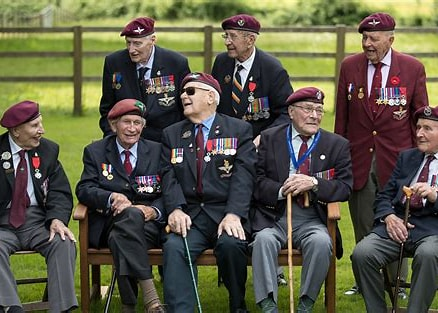
  • Veteran
    by David Palethorpe

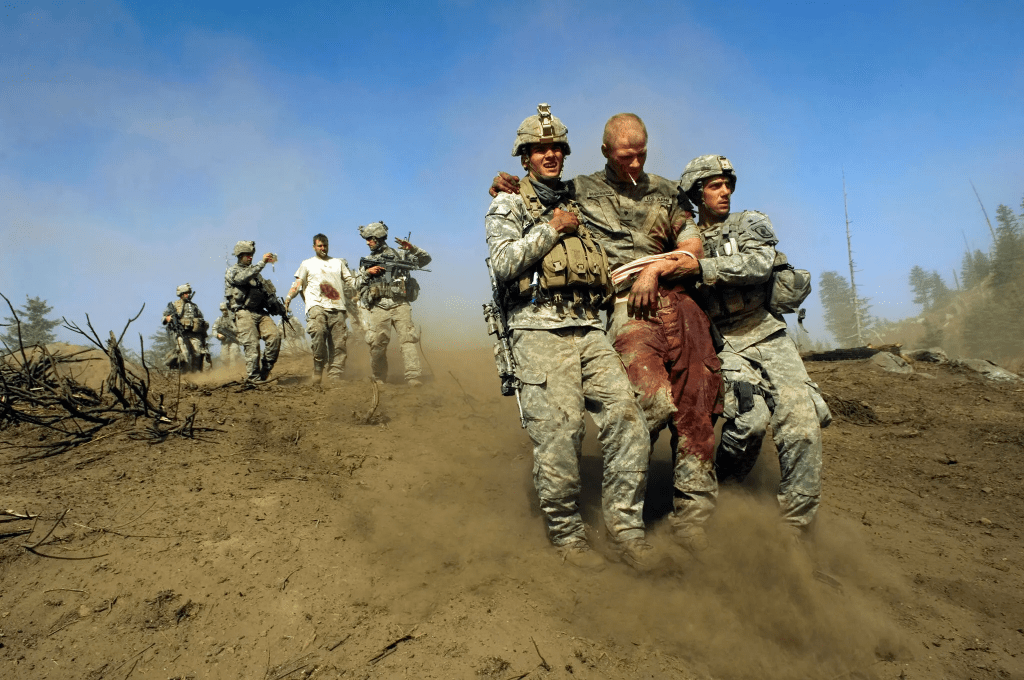
    When you see the veterans
    sitting with friends—
    or all alone—
    quietly contemplating
    what, in their life,
    they have done…

    You may find,
    for good reason—
    one they alone will know—
    why they don’t want to talk,
    why they just want
    to be on their own.

    They think about their lives.
    How was it
    that they survived?
    Minds full of guilt,
    thinking of the friends
    who died at their sides.

    They think about the fear
    that gripped them by the throat.
    They think of how they persevered,
    until the fight was over—
    and the battle won.

    When you see a veteran
    sitting, talking with their friends—
    just let them be.
    Be grateful.
    And simply walk away.

    They fought for the freedom
    we enjoy
    every single day.

  • Mr and Mrs Middle England – The Unabashed Englishman

    Every so often, a proud patriot hoists the St George’s Cross like it’s Excalibur and declares:

     “England for the English!”

    Stirring stuff — until you pause to consider what it actually means.

    If “English” is the badge of authenticity, then by definition everyone else — Scots, Welsh, and those inconvenient Northern Irish — are foreigners.

    And what of their descendants living in England?

    Logically, they’re immigrants too.

    Pack your bags, folks, it’s back to Cardiff, Glasgow, or Belfast for you.

    But here comes the sleight of hand.

    When pressed, the flag-waver backtracks:

    “No, no, we meant real foreigners. You know — the continental sort.”

    Suddenly, the Englishman rebrands himself as “British.”

    The Scots. Irish and Welsh are no longer foreign intruders but cherished compatriots.

    This flexibility extends to the passport, which proclaims: United Kingdom of Great Britain and Northern Ireland.

    Cornwall or Coleraine, Swansea or Surrey — all united under one banner.

    How terribly convenient.

    Until, of course, the unabashed Englishman leaves the island.

    Touch down in Spain or Florida, and the irony dawns: he is now the dreaded foreigner, reliant on the very international protections he scorns at home.

    Hypocrisy, it seems, travels well.

    The real comic turn comes on the return journey.

    At Edinburgh Airport, our traveller is a proud UK citizen.

    Yet once the train trundles past Carlisle, he sheds that British identity like a snakeskin and reverts to being an Englishman again.

    By implication, the Scots, Irish and Welsh — his compatriots only minutes before — become foreigners the instant he crosses the border.

    Such is the merry dance of flag-waving: English one moment, British the next, UK citizen abroad, foreigner in turn, and English once more on the return leg.

    A perpetual identity crisis played out every time someone decides which flag to drape around their shoulders.

    Perhaps the only certainty is this: however, you style yourself — English, British, or United Kingdomish — you will always be someone else’s foreigner.

    And maybe, just maybe, that’s the one truth worth waving a flag for.

    Mr and Mrs Middle England of Ipplepen:

    Scene: Breakfast table in Ipplepen. The kettle’s just boiled. Mr Middle England (Mr ME) has unfolded the Daily Mail with the solemnity of a priest opening scripture.

    Mrs Middle England (Mrs ME) is buttering toast and quietly bracing herself.

    Mr ME: (huffing) “Look at this, Margaret! At last, someone’s saying it. England for the English! St George’s flag flying proudly! None of this nonsense about foreigners taking over.”

    Mrs ME: (without looking up) “Lovely, dear. Just remind me — do the Welsh count as foreigners?”

    Mr ME: (indignant) “Don’t be ridiculous. They’re British.”

    Mrs ME: “So not English then?”

    Mr ME: “Well… no. But they’re our kind of not-English.”

    Mrs ME: (nodding) “Ah, I see. Special category of foreigner. Like cousins you tolerate at Christmas.”

    Mr ME: (ignoring her) “And the Scots too — they’re British.”

    Mrs ME: “Until they want independence, at which point you call them ‘moaning foreigners who should be grateful,’ don’t you?”

    Mr ME: (squirms) “Yes, well, that’s different.”

    Mrs ME: “Different flag, different tune. So let me get this straight. You’re English in Ipplepen, British when you need the Welsh, Irish and Scots to make up the numbers, and United Kingdomish when you want your passport to get you through passport control in Malaga?”

    Mr ME: (triumphant) “Exactly!”

    Mrs ME: (smiling sweetly) “So when you land in Malaga, you’re the foreigner. And when the Spaniards treat you politely, it’s because they don’t think you’re invading their way of life. They just think you’re a sunburnt tourist buying rubber rings from Lidl.”

    Mr ME: (splutters into his tea) “But that’s different! I’ve got rights. Human rights. It’s in the passport.”

    Mrs ME: “Yes, love. And so has anyone arriving here with the same bit of paper in their pocket. Funny that.”

    Mr ME: (grumbles) “It’s not the same.”

    Mrs ME: “It’s exactly the same, Harold. Except when you get off the train at Edinburgh Airport, you’re a UK citizen, and the second the carriage crosses Carlisle, you’re English again. Very exhausting, all that changing nationality before breakfast.”

    Mr ME: (muttering) “Well… at least I can wave the flag.”

    Mrs ME: (patting his hand) “Wave away, dear. Just remember — to everyone else, you’re the foreigner with the noisy shorts.”

  • COLOUR BLIND

    By David Palethorpe

    The colours of the rainbow,
    The colours of the world,
    They brighten every moment,
    With beauty when unfurled.

    True beauty lives within us,
    Not in the shade of skin,
    It’s found in how we see the world,
    And what we hold within.

    We all are bound to beauty,
    It lifts and shapes our lives,
    Yet when we look at humankind,
    Be colour blind, Be wise.

    For skin reveals no measure
    Of the person we may find,
    The beauty of all humankind
    Resides within the mind.

  • Mr & Mrs Middle England: Old Gimmer Winter

    Winter, bloody winter.

    The days shrink, the evenings stretch, and with them comes the gloom — at least if you listen to Mr Middle England, Ipplepen’s very own Old Gimmer.

    For him, the lead up to the so-called “festive season” isn’t joyful at all.

    It’s futile, depressing, and every year he starts muttering long before the first mince pie lands on the Co-Op shelves.

    At one point, in a fit of despair, he even considered volunteering for a helpline — thinking that listening to other people’s misery might, at the very least, cheer him up.

    The problem, of course, is that Mr Middle England wouldn’t last long.

    Being the curmudgeon he is, he’d soon be demanding to know why the helpline wasn’t turning a profit.

    He’d probably suggest automating the whole system:

    If you’re feeling suicidal, press 1.

    If you thought you’d phoned a chat line, press 2.

    If you’re just wasting time, press 3.

    Add a John Cleese voiceover and a few bars of the Funeral March while on hold, and callers would be over the edge in minutes.

    Mrs Middle England, meanwhile, has her own way of coping with winter.

    While her Old Gimmer sits in the Con Club or Welly, expounding at length about it all being bollocks and balderdash, she’s already made the house cosy, stocked the cupboard with ginger wine, and is quietly humming along to the carols he insists he hates.

    She rolls her eyes at his grumbles, pats his arm, and tells him to “stop being so bloody miserable.”

    “Come on,” she says, “fresh air will do you good.”

    And out he goes, reluctantly, whereupon he deploys the one skill that defines him: the closed-mouth yawn.

    Delivered with perfect timing, it signals to all within range that winter is here, life is a burden, and he simply knows Christmas is nothing but trouble.

    Mrs Middle England just smiles, adjusts her scarf, and carries on walking.

    Between them, they’ve found a balance — his grumbles and her cheer, his gloom and her humour — that makes winter in Ipplepen bearable.

    And truth be told, in its own way, it’s rather wonderful.

  • FORGOTTEN

    by David Palethorpe

    Politicians made decree,
    But none would heed humanity.
    War declared—it had to be,
    No other choice if “to be free.”

    Broken soldiers home return
    To families left to weep and mourn.
    No compassion waits from society,
    That sent them to war “to be free.”

    While guns still roar and cannons thunder,
    Politicians will not name their blunder.
    The trail of blood, of shattered men,
    Hailed as heroes once again.

    But praise is fleeting, quickly gone,
    Forgotten by the very ones
    For whom they fought, for whom they bled,
    For freedom—while their own lives shred.

  • DON – THE BRAVE

    by David Palethorpe

    Our son Don,

    He was a special child,

    As special as can be.

    In fact, he was the specialest

    The world will ever see.

    And because he was so special,

    He made others look a fool.

    So we took the special action

    Of sending him to a special school.

    He dressed up in a uniform,

    A soldier from the past.

    So smart, so arrogant,

    As he paraded back and forth.

    It was because he was so special

    That he didn’t look so daft.

    Our Don looked every inch a hero —

    He was given an award.

    He wore it on his uniform,

    He even wore a sword.

    But then arrived a problem:

    A war for a real man.

    Against some yellow folk

    In a place called Vietnam.

    But our brave Don was special,

    Far too special to go and fight.

    So we paid for a deferment

    From the dreaded draft.

    So our brave son — so special —

    Got let off not twice,

    Or thrice, or four…

    He was considered so very special

    He avoided having to serve

    Five times and even more.

    And now our special son,

    Far too special to have served —

    The bully and the coward,

    Too special to be brave —

    Is now the Commander-in-Chief

    Of the good old USA.

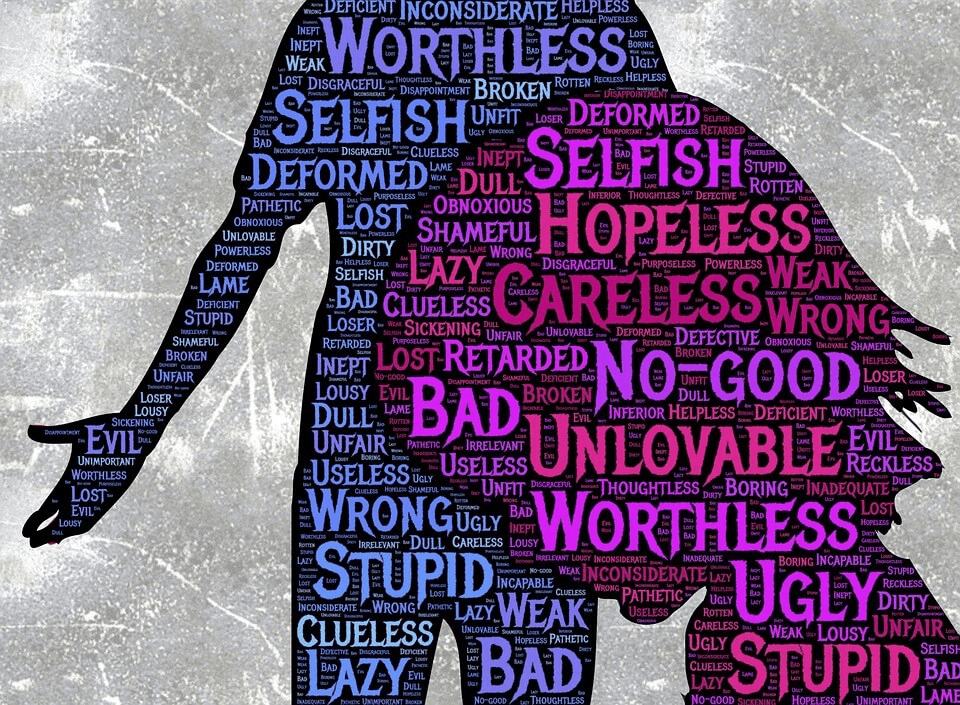
  • Does It Matter?
    Spoken word version

    by David Palethorpe

    Does it matter—
    what they think?
    Does it matter—
    what they say?

    Their words…
    drip like poison,
    but they never reach the core.
    They shout, they sneer, they whisper—
    and yet, truth does not bend.

    If it’s built on lies,
    it collapses.
    If it’s sharpened with spite,
    it dulls itself in time.

    The crowd may judge,
    the crowd may laugh,
    the crowd may turn away—
    but the crowd is not your compass.

    Still—
    do not mistake their noise as harmless.
    Every drop of venom leaves a stain,
    a wound in someone else’s day,
    a shadow that lingers longer than the sound.
    Cruelty corrodes,
    even when it misses its mark.

    Listen.

    The only thing that matters,
    when the noise has died,
    when the night is quiet,
    when you’re left with nothing but yourself—
    is this:

    Did you stay honest?
    Did you stay true?

    Because if you did—
    you’ve already won.

  • Durham Statue

    by David Palethorpe

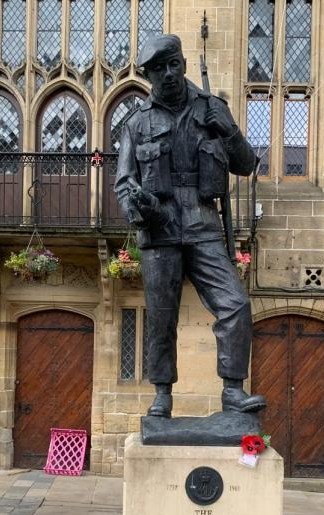
    There is a statue
    in the square,
    standing all alone,
    his soul laid bare.

    Sad and forlorn,
    I long to know his story.
    What of his comrades—
    where are they now?

    Did they fall
    in some forgotten field,
    or return as heroes
    to a land of hope,
    a land fit for them?

    Or do they weep,
    from where they are,
    for what might have been—
    the freedoms they dreamed,
    freedoms with a price:

    the price of sacrifice,
    the statue’s silent gift.

  • ALONE

    by David Palethorpe

    I saw the old man
    Sitting on a bench,
    Clutching his glass,
    Smoking sweet grass.

    Tired and dejected,
    Sad and rejected,
    Cast on the scrap heap,
    He sits all alone.

    No future ahead,
    His years long spent,
    The flame of his youth
    Now cold, now bent.

    The world moves fast,
    He moves no more,
    Just watches the tide
    From a distant shore.

    Yet in his stillness
    There lies a grace—
    The weight of a journey
    Time can’t erase.

    The laughter is gone,
    The tears remain,
    But both are chapters
    Of life’s refrain.

    And so he waits,
    Not lost, not found,
    Till silence calls
    Without a sound.

    No bitterness now,
    No need to pretend—
    He has walked his road,
    And it nears its end.

Reflections of a Boomer

Reflections on life of an insignificant atom in the universe

Skip to content ↓