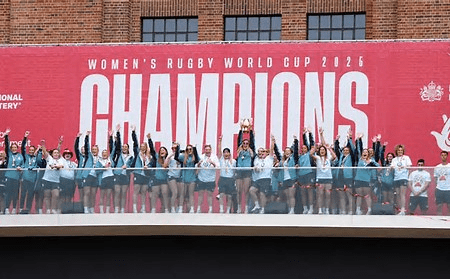
• Before more than 81,000 fans — the largest crowd ever for a women’s rugby match — the England Red Roses became world champions.

    Undefeated since their heartbreak four years ago, they have shown not just power and skill, but integrity, grit, and joy in everything they do.

    And here’s the irony.

    While mothers in the Red Roses squad return to international rugby after carrying children, giving birth, and raising families, their male counterparts collapse in theatrical agony at the merest tap of a boot.

    Nine months of pregnancy, hours of labour, and a lifetime of responsibility versus a grazed shin.

    One earns quiet respect; the other earns a standing ovation for best actor.

    While the Red Roses speak openly about who they are — many proudly LGBTQ+ — far too many men in professional sport still hide behind silence.

    The women’s game wears honesty as a badge of honour.

    The men’s game too often wears a mask.

    While women support one another with genuine togetherness — celebrating each other’s success as their own — men’s football and rugby too often fall into the trap of ego, excuses, and finger-pointing.

    And yet, some still dismiss women’s rugby by saying “they’re not as strong as the men.”

    True, biology gives the men more bulk.

    But when it comes to vision, skill, and spotting opportunities to score, the women are arguably better.

    Perhaps if the men studied them more closely, we’d see fewer fumbled passes and squandered chances.

    What makes the Red Roses so refreshing is their authenticity.

    They love the game.

    They play for each other.

    They don’t fake, they don’t posture, they don’t hide.

    In an age of overpaid egos and endless VAR debates, that honesty is priceless.

    And this legacy stretches beyond England.

    Who could forget Samoa’s delight in scoring their first ever World Cup points?

    Or the roar of English fans celebrating with them?

    That is what sport is meant to be — not division, not theatre, but pure shared joy.

    So let’s be clear: the Red Roses are not just world champions.

    They are the standard-bearers of how sport should be played — with honesty, courage, and unity.

    And perhaps the greatest irony of all is this: it is the women in sport who now set the example the men need to follow.

  • Donald Is a Really Great Man

    Hey Stop picking on the wee manchild

    It’s time the world’s leaders woke up and started exerting some positive influence on Donald Trump — even though he is probably the one man in the entire world (and certainly in the USA) least prepared for the Presidency.

    But according to Nigel, this isn’t a problem.

    Oh no.

    According to Nigel, this is destiny.

    Picture the scene: Nigel struts on stage, pint held aloft like the Olympic torch, his tie permanently loosened. And with all the breathlessness of a boxing announcer, he bellows:

    “LADIES AND GENTLEMEN… THE PEOPLE’S CHAMPION… THE KING OF TWEETS… THE SAVIOUR OF WESTERN CIVILISATION… DOOOONAAAALD J. TRUUUUMP!”

    Cue cheering (mostly from Nigel).

    “Nobody,” Nigel roars, “nobody has ever loved freedom and freedom of speech more than Donald!”

    (Except for me Nigel adds)

    “Nobody fights for the poor and marginalised quite like a billionaire with a gold-plated toilet!”

    (I just love millionaires whispers Nigel)

    “Nobody has ever tweeted at 3 a.m. with such raw courage!”

    Donald isn’t a dictator.
    Donald isn’t a megalomaniac.
    Donald is (he assures us) a candidate for the Nobel Peace Prize.
    Donald is, Nigel insists, the honest man of our times.
    Donald is, Nigel cries, the trustworthy man of destiny.
    Donald is, Nigel shrieks into the microphone, the greatest president — in the history of MAKING PRESIDENTS.

    And just in case anyone doubted this celestial truth, Donald himself confirmed it to the United Nations.

  • FLAGS R US

    Union Jacks EVERYWHERE – Who’s Still Flying the Flag?

    Hey everyone,

    I do hope you’re all doing well and not buried under a pile of e-learning modules or lost in a sea of xenophobic diatribes about the British Culture under threat.

    This week’s unnecessarily enthusiastic update from Flags R Us dives into the exciting (read: borderline obsessive) world of flags that still feature the Union Jack — even when you’d least expect it.

    British Overseas Territories: The Union Jack’s Holiday Homes

    Yes, the British Empire is largely, (OK definitely) a thing of the past, but the flag refuses to leave the group chat.

    There are 13 modern-day overseas territories where the Union Flag proudly claims squatters’ rights in the top-left corner:

    • Anguilla

    • Bermuda (Red Ensign, because they’re rebels)

    • British Antarctic Territory (penguin-approved)

    • British Indian Ocean Territory (stripy sea snakes!)

    • British Virgin Islands

    • Cayman Islands

    • Falkland Islands (Hi Argentina 👀)

    • Gibraltar

    • Montserrat

    • Pitcairn Islands (pop: probably less than this email’s CC list)

    • Saint Helena, Ascension and Tristan da Cunha

    • South Georgia and the South Sandwich Islands (not edible)

    • Turks and Caicos Islands

    Most of these use what’s called a Blue Ensign, which is basically:

    Blue background

    Union Flag in the corner

    Local badge awkwardly stuck in the middle

    Because nothing says “colonial admin chic” like heraldry and navy blue.

    Former Colonies: Thanks for All the Flags

    Before countries got their own branding consultants, they just slapped the Union Jack on everything. Here are some past examples of design by imperial decree:

    • Canada – Rocked the Red Ensign until 1965, then went full maple syrup 🍁

    • South Africa – Had the Union Jack plus two other flags, because one colonial power wasn’t enough

    • Rhodesia (Zimbabwe) – Union Jack until 1965, then things got… complicated

    • Hong Kong – Flying the Blue Ensign until the 1997 handover (insert ominous gong sound)

    • Barbados, Malta, Kenya, Jamaica, Nigeria – All went through a phase of “Union Flag in the canton” before finding themselves and choosing independence (and better design)

    Bonus Round: Subnational & Rogue Flags

    Flags you didn’t ask for, but we’re telling you about anyway:

    • Australia & New Zealand – Both still rock the Union Jack like it’s 1901. All six Aussie states also proudly cling on. It’s their whole personality.

    • Hawaii – Yes, the U.S. state. Still has the Union Flag in the corner because King Kamehameha was apparently vibing with British naval officers in the 1790s.

    • Newfoundland (pre-1949) – Once flying flags with more Union Jack than you can shake a cod at.

    • Naval Ensigns – Red = civilian, Blue = government, White = Royal Navy. There’s a quiz coming. (No, there isn’t.)

    Summary

    • 🇬🇧 Union Jack: Still getting gigs

    • 🏝 British Territories: Keeping things very Blue Ensign™

    • 🌍 Former Colonies: Moved on, but not without leaving some wild flags in the archives

    • 🧭 Hawaii: Still waving like it’s 1799

    • ⚓ Ensigns: Colour-coded colonial cosplay

    Anyway, if you’ve made it this far, congratulations — you’re officially a vexillophile. (That’s someone who loves flags, not a Marvel villain.)

    Questions? Comments? Want to start a petition to redesign Bermuda’s flag? I’m here for it.

    Yours in unnecessary flag knowledge,

    Senior Union Flag Spotter | Flags R Us Dept.

    Working from somewhere not yet technically a British Overseas Territory

  •  What Kind of Future Are We Leaving Behind?

    What are we becoming—and does it really matter?

    It’s a strange way to begin a blog, but it struck me the other day while thinking about my next-door neighbours.

    They’re a young couple with a three-month-old son, Arthur.

    And if they’re reading this, yes, I am referring to you.

    It occurred to me that Arthur has a very real chance of still being alive in the year 2125.

    If that doesn’t make you stop in your tracks, think about this: in 100 years of the 68 million people now living in the UK, almost none of us will remain.

    We’ll all be gone.

    We sometimes look at photographs of our great-great-grandparents and talk about them as distant ancestors, but in truth, we know very little of their lives, their struggles, or what they endured to bring us to this point.

    So, what will Arthur—and his descendants—know of us?

    And what kind of world will they inherit?

    A Schism of Our Own Making

    I was born in 1949, just four years after the Second World War ended.

    Now, in my seventy-seventh year, I can see a dangerous schism growing in this country—not across the whole of the United Kingdom, but particularly in England.

    It is a schism of xenophobia.

    Instead of taking responsibility for the ills my own generation created—at home and abroad over the past seventy years —we are told that the problems of the nation lie at the feet of fewer than 150,000 people seeking asylum here.

    Think about that.

    A country of 68 million blaming its woes on a fraction of a percent of its population.

    And if there is one nation on this planet with little moral right to complain about others arriving “uninvited” and making use of local resources, it is surely Britain.

    Our history is one of imperialism, colonisation, of expansion, of taking what did not belong to us.

    What Does It Mean to Be “English”?

    This is where the debate often turns. “England for the English,” we are told by voices that call themselves “patriotic.”

    But what does being English even mean?

    For three centuries after 1066, the nobility of this country spoke French.

    Our monarchy has German roots.

    The people who call themselves indigenous Britons are themselves descendants of Vikings, Danes, and countless others.

    English identity has always been fluid, always borrowed, always changing.

    The idea of a pure Englishness is as much a myth as King Arthur of the Arthurian legend, (spoiler alert, there never was a King Arthur).

    Silence Is Complicity

    And yet, in my own community in South Devon, I see people drawn to the rhetoric of Reform UK and its leader Nigel Farage—wrapped in patriotism but fuelled by division.

    Let me be clear: not everyone who votes for such parties is racist or xenophobic.

    But those who stay silent, those who shrug and say, “there’s no point voting,” create the space for those voices to grow stronger.

    History teaches us where that path leads.

    In the last century alone, we saw millions perish when “keep our country pure” became a rallying cry.

    The victims were overwhelmingly the innocent: women, children, families destroyed by hatred.

    A Thought for Arthur

    And so I come back to Arthur, next door.

    Perhaps one day he will grow up to be a leader of this country.

    What kind of nation will we leave him?

    One that turns its back on desperate people who cross continents for safety.

    Or one that remembers compassion, tolerance, and the debt we owe to those who stood by us—even dying alongside us—in the world wars of the last century?

    The truth is that the younger generations are already living in the world we created.

    Our children, our grandchildren, are growing up inside the society shaped by our choices.

    If we hand them a country built on fear and exclusion, we cannot blame anyone but ourselves.

    So, sit at home if you wish.

    Ignore politics if that’s your choice.

    But spare a thought for 21st Century Arthur—and for all the children like him—who will live with the consequences of what we do, or fail to do, today.

    Because let’s face it: the mess we are in has nothing to do with a few desperate people crossing the Channel in rubber boats.

    It has everything to do with us.

  • Ipple-Pen Diary Mr & Mrs Middle England: Autumn Sneaks In

    Autumn has crept into Ipplepen not with a bang but with a sly shuffle — cooler mornings, gusty winds, sideways rain, and the occasional burst of sunshine that tricks you into thinking it’s spring again.

    Mr & Mrs Middle England embrace it the only way they know how: moaning.

    For the next six months, the complaints will be about damp, dark evenings, icy winds, and draughty houses — until, of course, summer returns and then it’ll be “too hot, can’t sleep.”

    Still, autumn has its consolations: slabs of sticky ginger parkin, treacle toffee for the reckless who don’t mind losing a filling – in the full knowledge that a dentist appointment is not available, and Leonard (Bloody) Cohen crooning misery in the run up to Christmas.

    The trees around Orley Common are late to drop their leaves, which causes havoc in the gales.

    Acting like giant sails, branches have torn away, and a few trees themselves have toppled over.

    The locals shrug — “that’s Devon weather for you” — while the “blow -ins,” who moved here expecting endless sunshine and postcard scenery, now realise they’ve bought into a county, beautiful as Devon is, where the forecast reads like a revolving door: global warming, fine day, global warming, torrential rain, global warning, gale-force winds, repeat.

    In Ipplepen, all four seasons can arrive before lunchtime, sometimes with a trampoline or wheelie bin rolling past your window just to underline the point.

    This is the time of year when Mr Middle England tests his DIY.

    Will the sticky-back-plastic repairs hold the fence?

    Will the draft excluder keep out the icy wind this time?

    Will the cat flap finally stay shut in a gale, or will it once again act like an air-conditioning unit designed by Beelzebub?

    Discussions with Mrs Middle England on replacing the door and getting rid of the cat are ongoing.

    Only time and the weather will tell.

    In the meantime, there’s one fool-proof solution: wrap up, head to the Pub or Con Club, sit by the fire, and enjoy a pint.

    The walk home may be tricky in the wind and rain, but Heigh-ho — it’ll soon be that time of year when everyone will soon need to fake being happy.

    P.S. Mr and Mrs Middle England are not real people? – at least that is what I am being told!!!

  • One Flag, Two Meanings — We Have a Choice

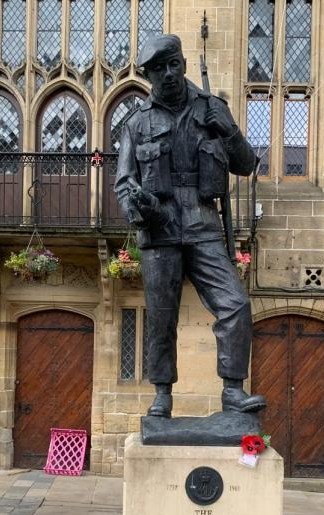
    For 23 years in the Royal Navy, I marched past the Union Jack and White Ensign at sunrise and saluted them at sunset.

    I guarded them, celebrated them, and honoured the sacrifices of those who served before me.

    Those flags stood for something: freedom, respect, tolerance—and service alongside people from every corner of the globe, many of whom gave their lives for the freedoms the flags represented.

    Today, I see those same flags used for two opposite purposes.

    One, to unite—welcoming our multi-ethnic armed forces, our colleagues in hospitals, our immigrant workers on farms, in tourism, and in every trade.

    The other, to divide—to demonise immigrants, fuel fear, and stoke hatred.

    Here are the facts:

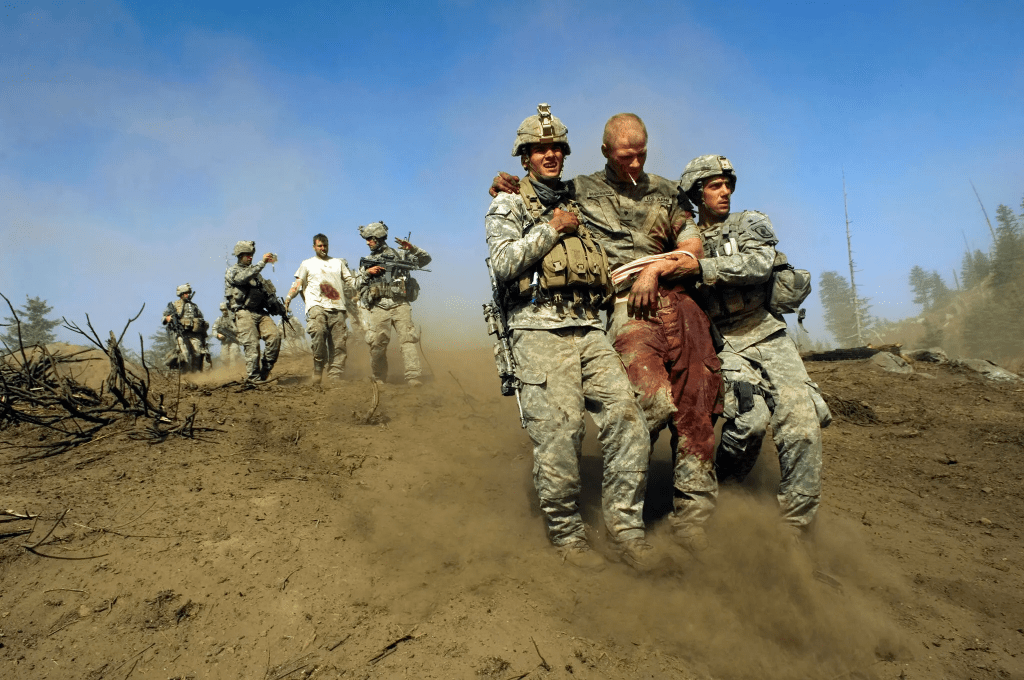
    • Over 16,000 members of our Armed Forces are from ethnic minority backgrounds. Nearly half are not UK nationals.
    • In the NHS, almost 265,000 staff—19% of the workforce—are non-British nationals.
    • Among nurses, nearly 27% are from abroad.

    These are not just statistics.

    They are people.

    They save lives.

    They protect us.

    They keep our country moving.

    But we also see the flag used differently:

    • Tens of thousands in London recently waved it to demand the expulsion of immigrants and the overthrow of a democratically elected government.
    • Extremist voices—far-right, anti-LGBTQ, and racist—have tried to claim ownership of the flag as a symbol of exclusion.

    So here is the truth:

    Our flags are either symbols of unity or symbols of hate.

    They cannot be both.

    We as a United Kingdom must choose.

    Do we uphold our flags as emblems that bind us together—where everyone, whether born here or abroad, is equal and respected?

    Or do we allow them to be hijacked as tools of division and fear?

    Do we honour those who contribute—serving in our forces, caring for us in hospitals, driving our buses, picking our crops?

    Or do we treat them as second-class citizens?

    Do we embrace a politics of inclusion, respect, and fairness?

    Or do we let extremists rebrand patriotism as exclusion?

    I will always support the Union Flag—not because of where I was born, but because of what it means: duty, freedom, service, tolerance.

    Now, it is on all of us to decide what it will mean in the future.

    The flags of our nations will either stand for unity or for hate.

    They cannot be both.

    The choice is ours

  • Mr and Mrs Middle England in Ipplepen – Memories

    Like so many South Devon villages, Ipplepen has had to adapt and change with the times.

    At the monthly film night in the Village Hall, they often show old reels of village events before the main feature.

    Some in the audience love it.

    Others squirm, suddenly confronted with what they looked like twenty or thirty years ago.

    It’s funny — even for those who were there at the time, the images already feel like they belong to a different, distant age.

    Old photographs do more than preserve faces.

    They capture the life of the village.

    A time when Ipplepen had a bakery, a second pub, a garage, and even an undertaker.

    The women wore pinnies and hats; the men wore jackets and ties.

    Everyday life, caught on film.

    We often wonder: did those people know they were being preserved for posterity?

    Did the baker or the garage owner imagine that less than a century later their businesses would no longer exist?

    Photography democratised memory.

    For centuries, only the wealthy had their likenesses preserved in portraits, but suddenly anyone could be recorded in black and white.

    The result is that we don’t just see the gentry of the past, we see ordinary people like us — busy, proud, hopeful.

    Of course, times have moved on.

    Digital cameras, and now mobile phones, mean anyone can document everything, for better or worse.

    Sometimes it feels like people use their phones more for photographs than for actually talking.

    And yes, humour has evolved too.

    I suppose that the old joke about whether an entry in the “Village Idiot of the Year” contest was worth submitting would have been circulated following some foolish transgression by an individual.

    But once Donald Trump became President of the United States, again, the village elders gave up.

    Nobody here could compete with that.

    The bar had been set so low it seemed only fair.

    Still, looking back at Ipplepen through those photographs is a joy.

    A reminder of who people were, who ancestors were, how far we’ve come, and how much the village, like life itself, keeps on changing.

    Whether for better or worse if for others to decide.

  • Welcome to WordPress! This is your first post. Edit or delete it to take the first step in your blogging journey.

Reflections of a Boomer

Reflections on life of an insignificant atom in the universe
Skip to content ↓