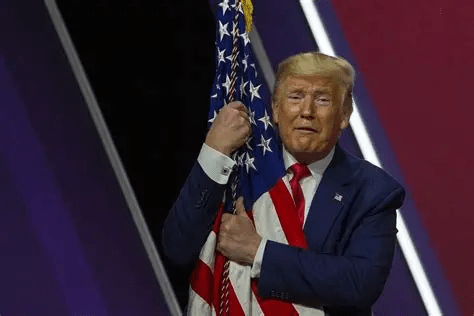
Donald Trump – The American Dream Revisited
by David Palethorpe
When I first wrote about Donald Trump in October 2016, I did so with a sense of foreboding — a deep unease that the people of the United States might actually elect him as President.
At the time, I described him as a liar, a misogynist, a sexual predator, and a racist.
Many dismissed those words as exaggerated, partisan, or unfair.
History has since proven they were not.
The American people did elect him.
Not once, but almost again in 2020.
And now, in 2025, he once again stands at the centre of American politics — not as a sideshow, but as the main act in a country that still cannot decide whether it wants to be shocked or entertained.
Back in 2016, I wrote that Trump was not an aberration but a product of America itself — the inevitable outcome of decades of cultural bravado and political complacency.
Eight years later, that observation feels truer than ever.
His rise was never just about one man.
It was about what a significant portion of America wanted to see reflected back at them: brashness, wealth, resentment, and the unrelenting self-belief that the United States is “the greatest country on earth.”
But the world has changed.
America’s moral leadership has eroded, not only because of Trump but because of what he revealed — a fragile democracy built on myth and performance.
The global admiration once instinctively granted to the United States has been replaced by suspicion, cynicism, and, increasingly, indifference.
The reasons are clear:
- Trump’s attempt to overturn the 2020 election and his undeniable role in the January 6th attack on the Capitol.
- The deepening tribalism that now defines American politics, where compromise is weakness and loyalty to a cause outweighs truth.
- The growing mistrust among America’s allies, who now hedge their bets, no longer convinced that the U.S. is a stable or reliable partner.
The “land of the free” has become a land divided against itself.
In 2016, I feared America would turn inward — that its people, weary of global responsibilities, would embrace isolationism and nationalism while the rest of the world quietly moved on.
That fear has been realised.
Trade wars have replaced trade agreements.
Treaties have been abandoned.
Leadership on climate change has faltered.
The United States, once a symbol of innovation and optimism, now feels defensive, paranoid, and economically unstable.
And yet, America cannot escape the world.
Its influence lingers through its technology giants, its currency, and its military presence.
But even those pillars are crumbling.
Tech dominance has shifted toward Asia.
The dollar’s supremacy is being challenged.
And the U.S. military — though still formidable — finds itself overstretched and morally adrift.
America is no longer admired.
It is tolerated.
No longer feared, but increasingly ridiculed.
I once wrote that Americans hide their insecurity behind bravado — that their obsession with greatness is really an admission of fear.
That insecurity now defines their politics.
Conspiracy theories, culture wars, vindictive partisanship, and the refusal to accept electoral outcomes are all symptoms of a nation unsure of its identity.
The American Dream — once about opportunity and hope — has become a brutal contest of money and power.
And Donald Trump, with his ostentatious wealth (or at least the appearance of it), his endless legal troubles, and his relentless self-promotion, is not an outlier.
He is the embodiment of that dream — transactional, performative, and ruthlessly self-interested.
From outside the United States, the view is no longer one of awe or envy.
It is, increasingly, a mixture of sadness and pity.
Pity for a nation that once symbolised democracy, now treating it as disposable.
Pity for a people so divided that they would risk their republic rather than compromise.
And yes — still laughter, not with Americans, but at them.
To much of the world, Trump is not the disease; he is the symptom.
He is the visible manifestation of America’s deeper malaise — its obsession with celebrity, its disdain for nuance, its craving for drama over substance.
The tragedy is not that Trump exists.
The tragedy is that so many Americans still believe he represents their best chance of being “great again.”
Trump’s presidency — and the years of chaos it inspired — have left scars that may never fully heal.
Truth has become negotiable.
Elections are no longer trusted.
Politics has turned into theatre — loud, angry, and hollow.
The aura of American democracy, already fading by 2016, now teeters on the edge of extinction.
The United States, for all its power and history, is now seen less as a model to follow and more as a cautionary tale.
In 2016, I warned that Donald Trump was the embodiment of the American Dream — the living, breathing symbol of a nation obsessed with wealth, fame, and dominance.
In 2025, I can only add this: he is also the mirror America holds up to itself.
Whether Americans like the reflection or not, it is their creation.
And all in all, Donald Trump remains exactly what the United States deserves — a leader born of its own myths, sustained by its own insecurities, and destined to haunt its politics for years to come.


Leave a reply to aparnachillycupcakes Cancel reply